
Last quarter, a newly acquired European subsidiary delayed our consolidated close by six days because its QuickBooks Online ledger could not talk to our parent NetSuite instance. Building a multi-entity intercompany accounting automation iPaaS pipeline cut that intercompany reconciliation cycle from six days to forty-five minutes.
When your organization operates across separate legal entities on disconnected ERPs, manual due-to and due-from spreadsheets break down fast. Here is the exact integration architecture, payload design, and accounting logic I deployed in production to keep cross-entity ledgers balanced automatically.
Why Native ERP Consolidation Fails After Multi-Entity M&A
Single-instance ERP modules like Oracle NetSuite Automated Intercompany Management work brilliantly when every subsidiary lives inside the same database. Reality rarely stays that tidy after an acquisition or international expansion.
You inherit regional entities running Xero, QuickBooks, or local legacy accounting software. Ripping and replacing a profitable subsidiary’s ERP takes nine to twelve months, yet corporate controllers still need clean monthly eliminations under FASB ASC 810 consolidation rules.
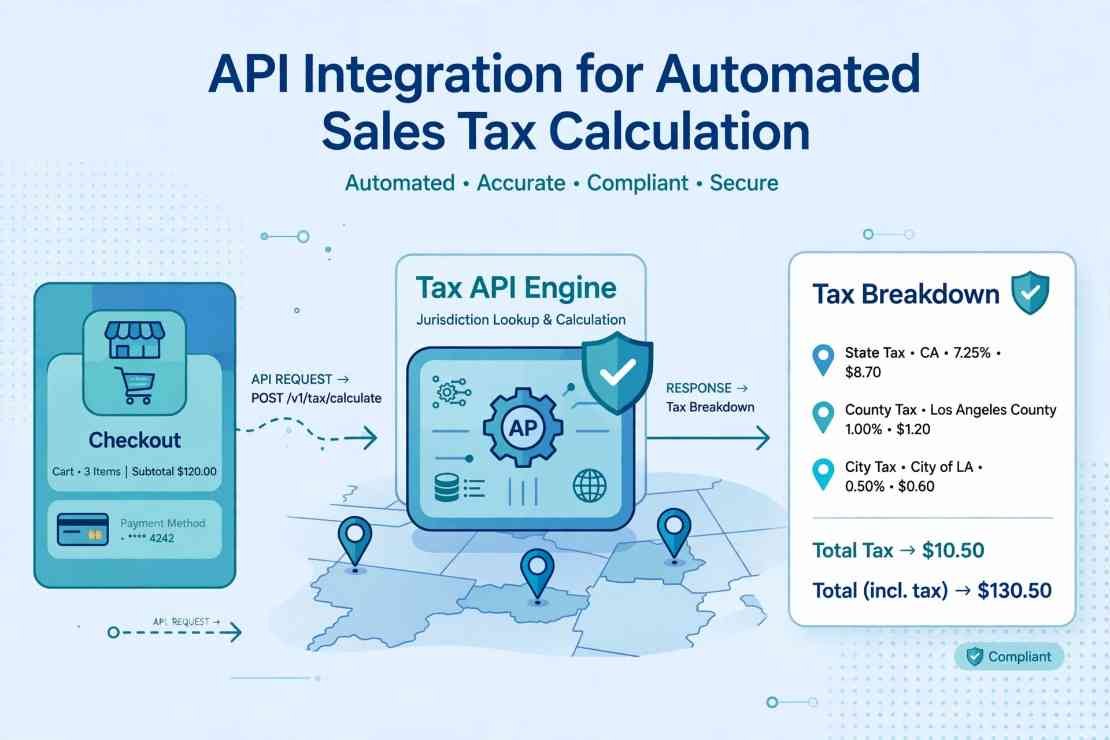
When integrating acquired subsidiaries running different accounting platforms, evaluating an embedded accounting API vs. custom ERP connectors helps determine the most scalable approach to connecting heterogeneous ledgers without replacing existing ERP systems.
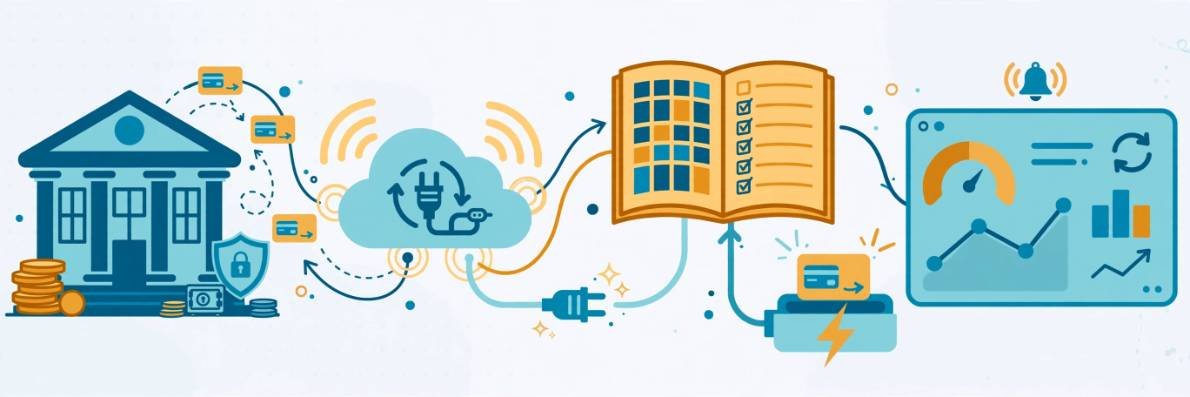
An Integration Platform as a Service (iPaaS) acts as an event-driven translation layer between heterogeneous ledgers. Instead of forcing every entity onto one database on day one, the iPaaS intercepts source transactions, applies transfer pricing markups, locks exchange rates, and posts balanced reciprocal journal entries across systems.
How I Architect a Multi-Entity Intercompany Accounting Automation iPaaS Pipeline
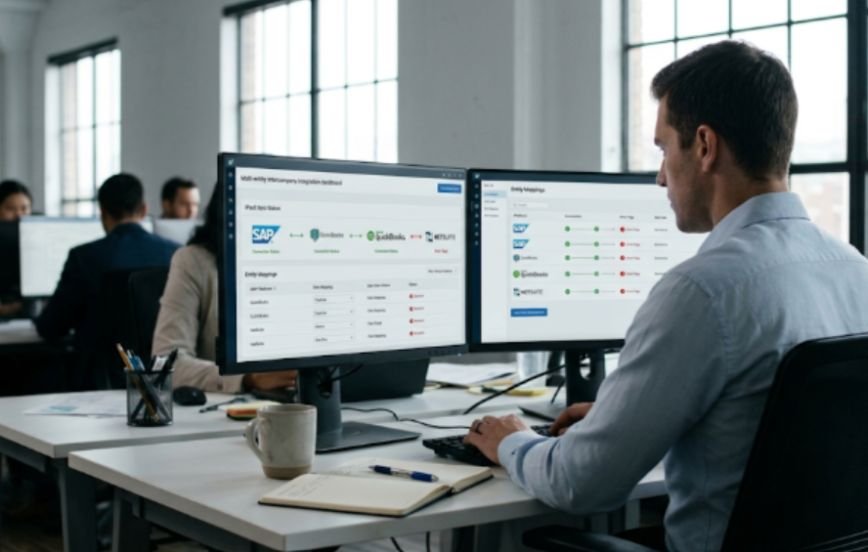
Following a proven Celigo ERP integration framework, I divide intercompany orchestration into three sequential stages. Separating ingestion from elimination ensures a single API timeout never corrupts your trial balance.
Stage 1: Reciprocal Due-To and Due-From Mirroring
Whenever the parent entity pays a shared vendor invoice or allocates corporate overhead, a webhook fires to the iPaaS. The recipe reads a dynamic Chart of Accounts (CoA) lookup table stored in a cloud data warehouse to translate parent GL codes into the subsidiary’s local account structure.
If the parent entity bills a subsidiary for shared engineering support, the iPaaS injects a shared IC_Correlation_ID into both ledgers. It simultaneously posts the intercompany receivable in the parent ERP and the matching intercompany payable in the target ERP.
Stage 2: Cross-Border FX Parity Under IAS 21 and ASC 830
Out-of-balance intercompany accounts almost always stem from two controllers booking the same cross-border transaction on different days using different spot rates. Under IFRS IAS 21 foreign exchange standards, monetary items must be recognized using the exact transaction-date exchange rate.
Implementing multi-currency accounting reconciliation automation helps finance teams maintain consistent exchange-rate records, identify currency discrepancies, and streamline reconciliation across international subsidiary ledgers.
To enforce rate parity, my iPaaS workflow queries a single treasury FX API at the exact second the parent transaction is approved. It stamps that rate onto both the USD parent entry and the EUR subsidiary entry before either API payload executes.
Stage 3: Deterministic Matching and Period-End Eliminations
Before the close checklist finishes, a scheduled iPaaS job extracts open intercompany sub-ledger lines from every connected ERP. Because both sides share an identical IC_Correlation_ID, matching runs deterministically rather than relying on fuzzy amount lookups.
The matching engine also uses an automated accounts receivable aging and collections workflow to identify overdue balances and flag financial discrepancies before month-end close, while routing FX rounding variances above $1.00 to regional controllers through Slack.
Worked Example: Automating a $45,000 USD-to-EUR Shared Service Allocation

To make this concrete, here is how my production pipeline processes a monthly shared cloud infrastructure and management charge from our US parent (Entity_US, USD) to our German subsidiary (Entity_DE, EUR):
- Source Event: Entity_US approves a $45,000.00 vendor bill for shared cloud infrastructure and triggers a 5% cost-plus transfer pricing rule ($2,250.00 markup), bringing the total intercompany charge to $47,250.00 USD.
- FX Rate Lock: The iPaaS fetches the live spot rate of 0.9200 EUR/USD, calculating an exact subsidiary liability of €43,470.00 EUR.
- Parent Ledger Entry (Entity_US): The iPaaS posts a journal entry debiting 1310 – Intercompany Receivable (Entity_DE) for $47,250.00, crediting 5100 – Reimbursed Cloud Expense for $45,000.00, and crediting 4200 – Intercompany Markup Revenue for $2,250.00.
- Subsidiary Ledger Entry (Entity_DE): Within three seconds, the iPaaS posts a bill in QuickBooks Online debiting 6400 – Shared Infrastructure Expense for €43,470.00 and crediting 2150 – Intercompany Payable (Entity_US) for €43,470.00.
Both records carry the metadata key IC-2026-11-US-DE-0894. At month-end, the elimination workflow reverses both open balances and strips out the $2,250.00 internal markup so consolidated revenue is never inflated.
Architectural Comparison: iPaaS vs. Single-Instance ERP vs. Close Software
Choosing the right orchestration layer depends on how many distinct ERP platforms you maintain and whether you need real-time operational triggers.
| Evaluation Criteria | iPaaS Orchestration (Workato, Celigo, Tray.ai) | Single-Instance ERP (NetSuite OneWorld, Sage Intacct) | Close Management Layer (BlackLine, FloQast) |
| Multi-ERP Support | Native strength; connects NetSuite, SAP, Xero, and QBO | Requires all subsidiaries on one ERP instance | Ingests CSV or API extracts from multiple ERPs |
| Transaction Timing | Real-time event-driven webhooks | Real-time within native database boundaries | Batch processing near period-end |
| Transfer Pricing Logic | Custom JSON/SQL rules for cost-plus markups | Built-in intercompany pricing rules | Limited; relies on upstream ERP calculations |
| Maintenance Overhead | Moderate; requires API monitoring and schema updates | Low; vendor-managed native upgrades | Moderate; rule maintenance during CoA changes |
Four Engineering Guardrails That Prevent Silent Ledger Corruption
Connecting financial APIs without strict fault tolerance creates worse problems than manual spreadsheets. Whenever I deploy a new subsidiary connector—whether for intercompany eliminations or payroll journal entry automation—I enforce four non-negotiable engineering controls:
- Deterministic Idempotency Keys: Every payload includes a unique key formatted as IC_{SourceEntity}_{DocID}. If a network timeout causes the iPaaS to retry a request, the destination ERP rejects duplicate postings automatically.
- Two-Phase Commit Rollbacks: If Entity_US posts successfully but Entity_DE rejects the API call due to an inactive GL code, the iPaaS marks the parent transaction IC_SYNC_FAILED and halts downstream close tasks.
- Period-Lock Pre-Checks: Before writing a journal entry, the workflow queries the target ERP’s accounting period status. If a subsidiary controller locked the prior month early, the iPaaS automatically dates the entry to the first day of the next open period.
- Dimension Tagging Over Account Bloat: Never create separate GL accounts for every subsidiary pair. Pass a standardized IC_Partner_Code dimension on every line item so your BI layer can slice consolidated results cleanly.
Frequently Asked Questions
1. What is a multi-entity intercompany accounting automation iPaaS?
It is cloud middleware that connects separate ERP systems across multiple subsidiaries to automate reciprocal journal entries, FX conversions, and period-end eliminations.
2. Can an iPaaS connect QuickBooks Online to NetSuite for intercompany eliminations?
Yes, an iPaaS maps QuickBooks Online accounts to NetSuite subsidiaries via APIs and posts matched due-to and due-from entries into a consolidated elimination entity.
3. How does an iPaaS handle intercompany foreign exchange differences?
It locks a single timestamped spot FX rate at transaction creation so both entities record identical base values and automates month-end revaluation entries.
4. Does iPaaS intercompany automation comply with US GAAP ASC 810?
Yes, when configured with audit logs, idempotency keys, and automated elimination rules, it enforces full reciprocal balance cancellation required under ASC 810.
Stop Reconciling Intercompany Spreadsheets at 2 AM
Manual intercompany reconciliations do not scale once your organization crosses three legal entities or two currencies. Map out your highest-volume cross-entity transaction flow first—usually shared vendor expenses or management fees—and build an event-driven iPaaS recipe with strict idempotency keys before tackling complex inventory transfers.