

Choosing between an embedded accounting api vs custom erp connectors nearly derailed our product roadmap two years ago. We spent four months building a direct NetSuite integration for a single enterprise prospect, only to watch three mid-market deals stall because we lacked QuickBooks Online and Xero support.
Every B2B SaaS and fintech team hits this architectural fork eventually. You either abstract away ledger complexity through a unified API or commit your engineers to maintaining bespoke connectors for each accounting system.
After shipping both architectures in production for US fintech and vertical SaaS products, I learned that the right choice rarely comes down to initial build speed. It comes down to data freshness, schema mutability, and where you want your engineering payroll going in year two.
Core Architecture Differences: Unified Abstraction vs. Direct ERP Builds
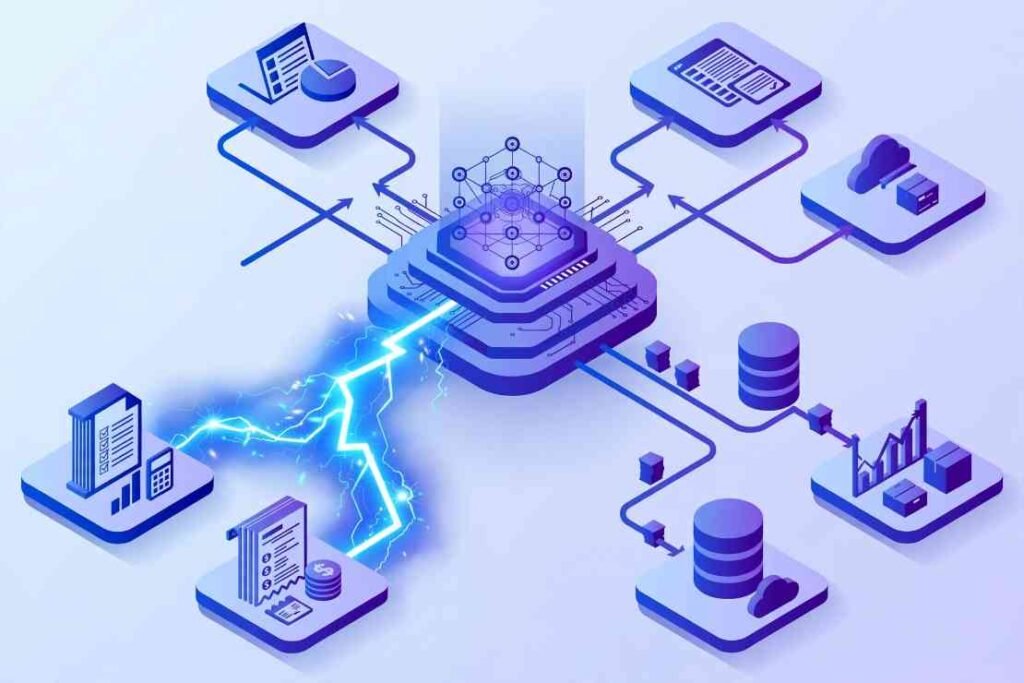
At a high level, both approaches move invoices, bills, journal entries, and chart-of-accounts records between your app and a customer’s general ledger. The difference lies in who normalizes the data and maintains the pipe.
| Architectural Factor | Embedded Accounting API | Custom ERP Connectors |
| Time to Launch 5 Ledgers | 2 to 4 weeks | 9 to 14 months |
| Authentication & Token Refresh | Handled via white-label OAuth UI | Built and maintained in-house per ERP |
| Schema Normalization | Single standardized JSON data model | Custom mapping per ERP (REST, SOAP, XML) |
| API Version Maintenance | Absorbed by the unified API vendor | Tracked and patched by your engineers |
| Custom Object Access | Limited to mapped fields + passthrough | Unrestricted native endpoint access |
How Embedded Accounting APIs Work Under the Hood
An embedded accounting API acts as a translation layer between your backend and dozens of accounting platforms. You integrate once against a single normalized schema. When your app creates an invoice, the unified provider translates that payload into the exact format QuickBooks, Xero, or Sage Intacct expects.
Most teams overlook a critical architectural split among unified vendors: sync-and-store versus real-time passthrough. Sync-and-store providers copy your customer’s ledger into their own database on a schedule, which makes historical queries fast. Real-time passthrough engines process requests in memory without storing financial records, giving you live data and cleaner security reviews.
What Building Custom ERP Connectors Actually Requires
Building custom connectors means coding directly against native APIs like Intuit’s QuickBooks Online API or Oracle NetSuite’s SuiteTalk REST Web Services. You manage OAuth 2.0 token rotations, webhook signature verification, rate-limit backoff queues, and pagination quirks for every platform.
Even within a single ERP, surfaces fragment quickly. Modern NetSuite integrations often require combining SuiteTalk REST for writes, SuiteQL for fast relational reads, and custom RESTlets when native endpoints lack coverage.
The True 3-Year Cost Breakdown (Beyond Sticker Price)

Founders frequently balk at unified API subscription fees, assuming an in-house build is cheaper over time. Our internal post-mortem proved the opposite once we accounted for ongoing maintenance and platform partner fees.
- The Custom Build Reality: Supporting four core ledgers—QuickBooks Online, Xero, NetSuite, and Sage Intacct—took one senior integration engineer roughly eight months to ship. At a fully loaded US engineering cost of $210,000 per year, our initial build cost $140,000. Over the next two years, API deprecations, rate-limit refactors, and customer-specific field mappings consumed 40% of an engineer’s bandwidth—adding another $168,000 in maintenance, plus up to $4,500/month in direct ERP partner program fees. Three-year total: ~$362,000.
- The Unified API Reality: Onboarding 100 active customer connections on a tiered unified API averaged $1,300 to $2,200 per month depending on the vendor. Initial integration took three weeks ($12,000 in engineering time), and ongoing maintenance required less than five hours per month. Three-year total: ~$75,000.
Unless your core product is accounting middleware, spending $360,000+ to maintain ledger plumbing starves core roadmap features like failed payment recovery workflow automation or automated sales tax calculation.
Vendor Showdown: Merge vs. Codat vs. Rutter vs. Apideck
If you choose the unified route, your vendor selection dictates your ceiling. Based on our technical evaluations, these four platforms serve very different product profiles:
| Vendor | Data Architecture | Published Starting Price | Accounting Connectors | Primary Strength |
| Apideck | Real-time passthrough (zero storage) | $599/mo (25 connections) | 55+ platforms | Broadest international catalog & live passthrough |
| Codat | Sync-and-store (cached) | Custom annual contracts | ~17 platforms | Credit underwriting, lending & bank feeds |
| Rutter | Sync-and-store (hourly sync) | Custom per-connection | ~18 platforms | B2B fintechs combining commerce + accounting |
| Merge | Sync-and-store (daily on Launch) | $650/mo (10 connections) | ~14 platforms | Multi-category apps needing HRIS/CRM + accounting |
When evaluating these tools, test their passthrough capabilities before signing a contract. For instance, the Apideck Accounting API Reference exposes raw downstream payloads alongside extend_paths, letting you inject custom NetSuite fields without waiting for the vendor to update its unified schema.
Where Unified APIs Break Down (And Custom Builds Win)
Unified APIs are not a silver bullet. Pushing an abstraction layer into heavy enterprise workflows creates friction that only a direct connector can solve.
Multi-Entity Consolidations and Custom ERP Scripts
Mid-market and enterprise companies rarely run vanilla ERP instances. They rely on NetSuite OneWorld subsidiary hierarchies, custom SuiteScript triggers, or multi-warehouse inventory assemblies. When a customer’s invoice creation triggers three custom validation scripts inside SAP S/4HANA or Dynamics 365, a standardized schema often strips out the exact custom record IDs required to pass validation.
Enterprise InfoSec and Fourth-Party Data Risks
During Fortune 1000 security reviews, routing raw general ledger data through a fourth-party sync-and-store vendor triggers immediate red flags. Under the AICPA SOC 2 Trust Services Criteria, every sub-processor storing sensitive financial data expands your audit surface. Large enterprise buyers routinely mandate direct point-to-point TLS connections between your infrastructure and their ERP instance.
The Hybrid Playbook: Scaling From SMB to Enterprise Without Rewriting Your Stack
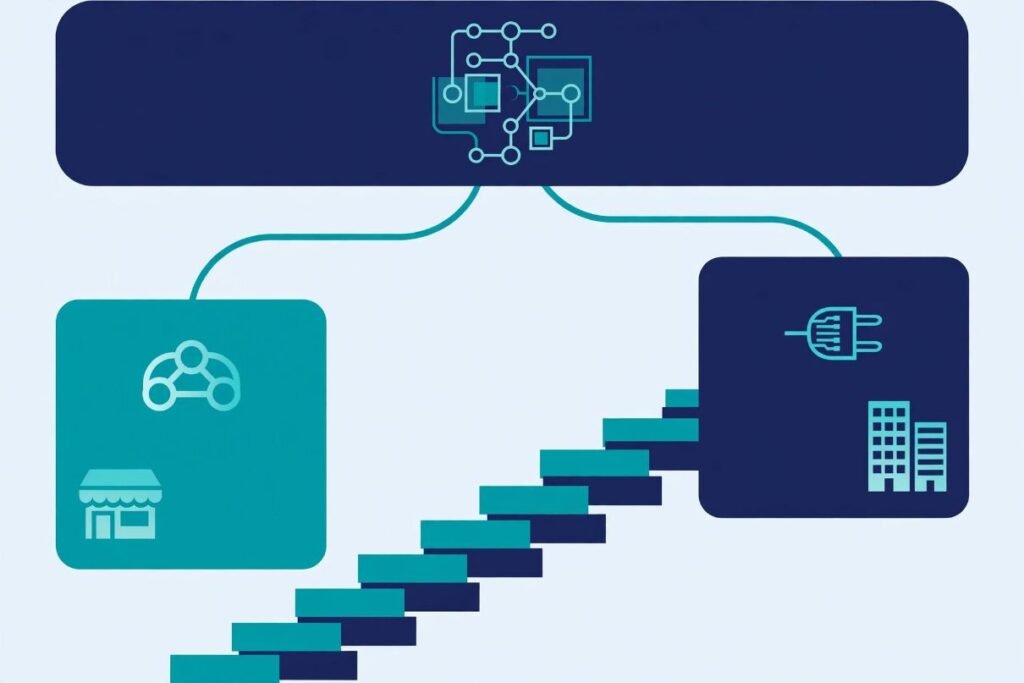
You do not have to treat this decision as permanent. The most resilient B2B teams run a hybrid integration architecture decoupled behind an internal domain interface:
- Wrap your ledger calls in an internal adapter. Never let unified API payloads leak directly into your core business logic. Map incoming data to your own internal Invoice and LedgerAccount interfaces from day one.
- Launch with an embedded API for your first 15 integrations. Capture 85% of your addressable SMB and mid-market demand immediately using a unified provider.
- Graduate high-ACV ERPs to native connectors. Once NetSuite or SAP accounts represent over 30% of your ARR—and enterprise buyers demand custom workflows—swap only those specific adapters to direct native builds without touching your application layer.
Stop Treating Ledger Plumbing Like Your Core Product
Customers rarely buy your software because you wrote a brilliant OAuth token refresher for Xero. They buy your product for the insights, automation, or financial workflows built on top of that data.
Start with an embedded accounting API to validate demand across multiple ledgers in weeks, keep your internal data models strictly decoupled, and reserve custom ERP connectors for the enterprise accounts paying enough to fund dedicated integration engineers.
Frequently Asked Questions
1. What is the main difference between an embedded accounting API and a custom ERP connector?
An embedded accounting API connects your app to dozens of accounting platforms through one standardized schema, whereas a custom ERP connector is built in-house for a single system to support deep, bespoke workflows.
2. When should a SaaS company switch from a unified API to a custom ERP connector?
Switch when a single ERP accounts for a major share of enterprise revenue and customers require custom scripts, complex subsidiary logic, or strict point-to-point security.
3. Do embedded accounting APIs support custom fields in NetSuite or QuickBooks?Yes,
leading providers offer passthrough requests and custom field mapping to read or write unmapped ERP fields, though deeply nested custom records still favor native builds.
4. Which embedded accounting API does not store customer financial data?Apideck uses a
real-time passthrough architecture that processes requests in memory without storing your customers’ underlying accounting records.



One thought on “Embedded Accounting API vs Custom ERP Connectors: What 3 Years of Integration Debt Taught Me”