
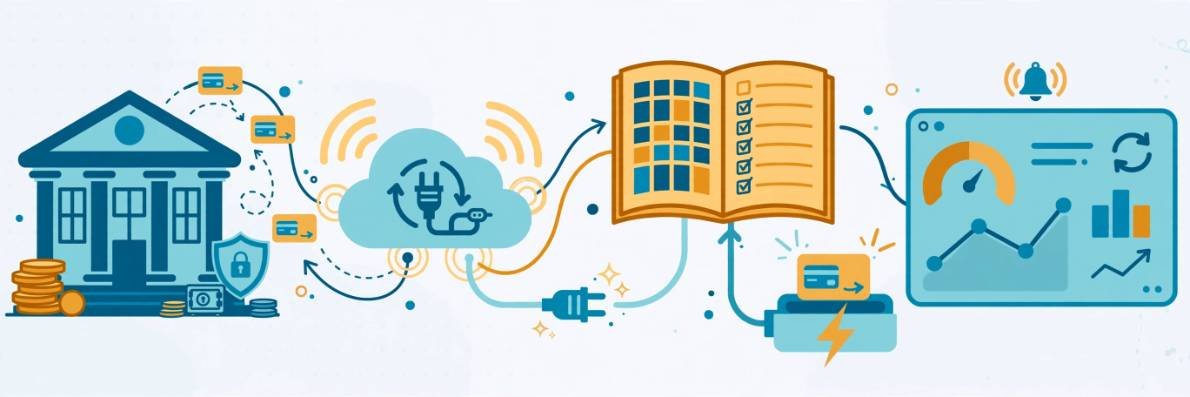
Last quarter, I watched a controller hold up a $1.4 million inventory purchase because her ERP showed yesterday’s cleared balance instead of the wire that landed twenty minutes earlier. Implementing a real-time bank feed API integration for ERP eliminates that blind spot by streaming live transactions, balances, and payment statuses directly into your general ledger. Instead of waiting on overnight SFTP batch files or manually uploading CSVs, your finance team sees cash move the exact second it settles.
Over the past six years, I have led twelve ERP banking integrations across Oracle NetSuite, SAP S/4HANA, and Microsoft Dynamics 365. Every single project proved one rule: connecting the pipes is easy, but surviving edge cases requires architectural discipline.
Why Legacy BAI2 Files Break Modern Treasury Operations
For decades, US commercial banking ran on overnight BAI2 and MT940 flat files dropped onto an SFTP server. That cadence worked when vendors accepted net-60 checks and treasury teams reconciled cash once a week.
Today, instant payment rails like FedNow and RTP move funds in seconds, yet legacy batch files still introduce up to 24 hours of reporting latency. Worse, when a single character breaks inside a fixed-width BAI2 file, the entire import fails silently. I once spent three days tracing a $92,000 suspense discrepancy caused by a truncated remittance string from a regional bank.
Modern REST APIs replace fragile batch polling with event-driven webhooks. When a customer wire hits your operating account, the bank pushes a structured JSON payload straight to your ERP middleware. That live feed immediately triggers downstream processes like matching workflow automation and feeds clean settlement timestamps into your automated revenue recognition api integration.
Choosing Your Bank Feed Architecture: Three Proven Paths
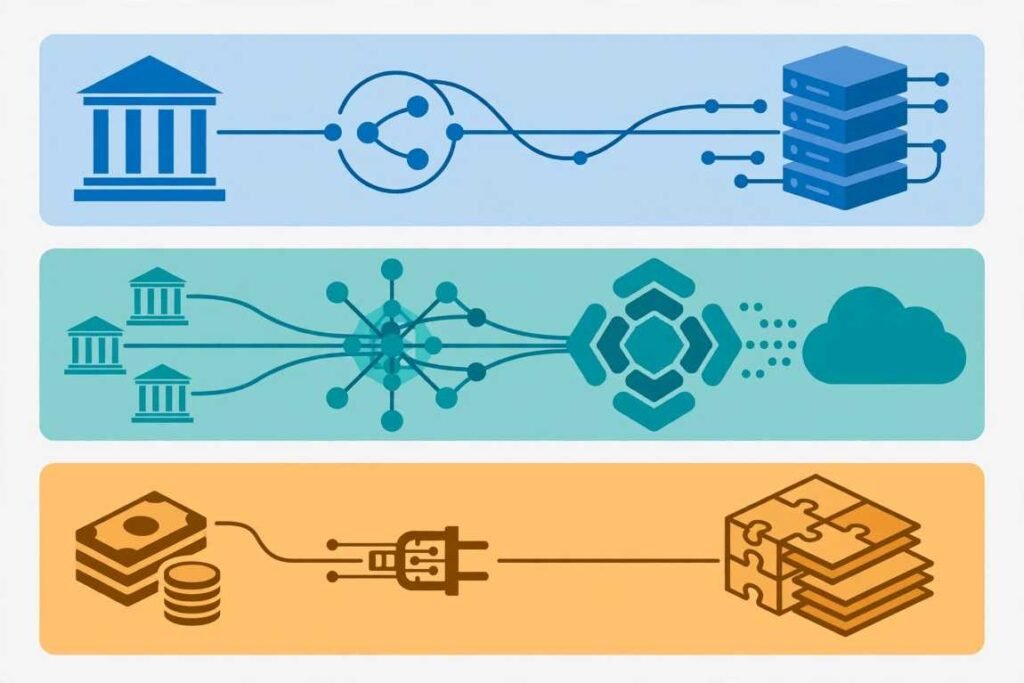
Before writing a line of middleware code, you have to pick the right connectivity layer. In my experience, every enterprise rollout falls into one of three distinct architectural models.
| Integration Model | Best Fit | Engineering Effort | Ongoing Maintenance |
| Direct Bank REST APIs | 1–2 primary commercial banks | High (custom auth & schemas) | High per bank partner |
| Open Banking Aggregators | 5+ domestic retail/business accounts | Low to Moderate | Low (normalized schema) |
| Unified Treasury Connectors | Multi-entity, multi-currency ERPs | Low (pre-built ERP adapters) | Vendor-managed |
Direct Corporate Bank REST APIs
Tier-one institutions like J.P. Morgan, Bank of America, and PNC now expose dedicated corporate REST endpoints for intraday balances, transaction reporting, and ACH or wire initiation. When I integrated a manufacturing client directly with J.P. Morgan’s treasury APIs, we achieved sub-three-second ledger updates.
The trade-off is engineering overhead. Every bank uses proprietary field names, unique OAuth token lifecycles, and custom error codes. If you bank with four institutions, you are effectively maintaining four separate integrations.
Open Banking Aggregators and CFPB Section 1033
If your business spreads cash across multiple regional banks, middleware aggregators like Plaid, Finicity, or Stripe Financial Connections normalize messy bank feeds into one clean schema. Regulatory momentum around CFPB Section 1033 open banking standards continues pushing US institutions away from brittle screen scraping toward permissioned APIs.
As Deloitte’s open banking compliance analysis highlights, standardized APIs dramatically reduce credential exposure while enforcing strict consent boundaries. Still, watch out for consent expiration windows and rate limits when syncing high-volume commercial accounts.
Unified Treasury Connectors
For mid-market and enterprise teams running complex ERPs, unified connectors such as Kyriba, Atlar, or native tools like Oracle NetSuite’s Bank Feeds SuiteApp bridge the gap. These platforms maintain pre-certified bank adapters and map data straight into your ERP’s native bank reconciliation module. You pay a higher SaaS licensing fee, but you shave months off deployment.
Hard Lessons From My Last ERP Bank Feed Rollout
During a recent NetSuite rollout for a wholesale distributor processing 14,000 monthly ACH credits, we cut our month-end close from six days down to 36 hours. However, two subtle bugs nearly derailed our user acceptance testing.
Solving the Duplicate Webhook Trap With Idempotency
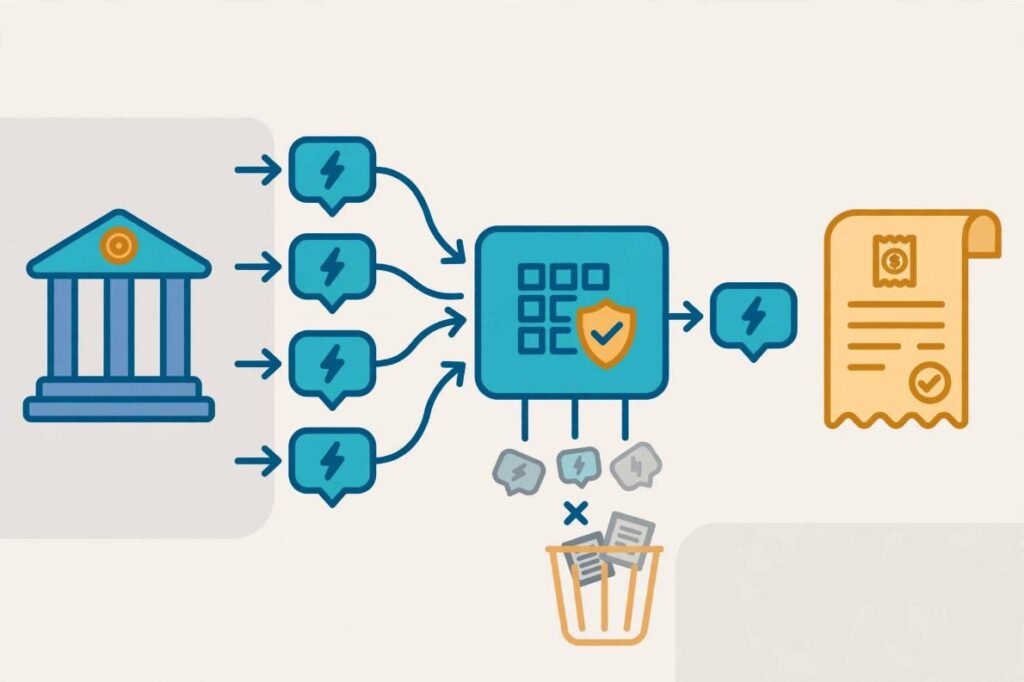
Banks guarantee “at-least-once” webhook delivery, not “exactly-once” delivery. During a peak Friday afternoon ACH settlement window, our bank’s gateway timed out waiting for an HTTP 200 acknowledgment and fired the exact same $48,500 credit webhook four times in ninety seconds.
Without safeguards, our ERP would have posted four identical cash receipts. We fixed this by storing the bank’s unique transaction_id and end_to_end_id in a Redis idempotency cache before writing to the general ledger. If an incoming webhook matches an existing key, our middleware logs the retry, returns a 200 OK, and drops the duplicate payload.
Mapping ISO 20022 Payloads to Your General Ledger
Many commercial banks now structure their API payloads around Federal Reserve ISO 20022 messaging standards, specifically camt.052 (intraday) and camt.053 (end-of-day) schemas. While ISO 20022 carries rich remittance metadata, banks still tuck invoice numbers into inconsistent unstructured text fields.
I always build a regex parser in the middleware layer to extract invoice IDs, virtual account numbers, and bank fee splits before the record touches the ERP. Clean data at the ingestion layer prevents your accounting team from manually untangling exceptions later.
Security Guardrails You Cannot Skip
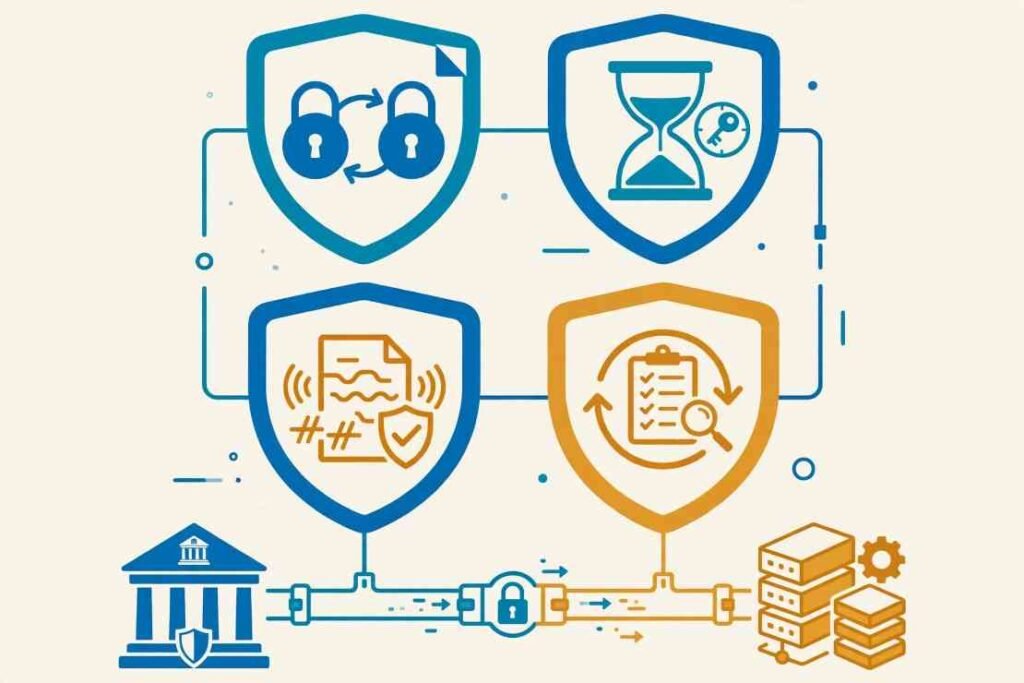
Opening a real-time pipe between your ERP and your corporate cash requires zero-trust engineering. Whenever I review a partner’s architecture, I mandate four non-negotiable controls:
- Mutual TLS (mTLS): Both your server and the bank must exchange CA-signed X.509 certificates so neither side accepts traffic from an unverified host.
- Short-Lived OAuth 2.0 Tokens: Scope tokens strictly to read-only statement endpoints unless your ERP explicitly initiates outbound vendor payouts.
- HMAC Payload Signatures: Verify the cryptographic signature header on every inbound webhook before parsing the JSON body to block spoofed credit alerts.
- Fallback Reconciliation Polling: Schedule an automated API pull every four hours to catch any events dropped during network blips.
Frequently Asked Questions
1. How does a real-time bank feed API differ from SFTP BAI2 files?
APIs stream individual transactions via instant JSON webhooks as they settle, whereas SFTP BAI2 delivers static batch files once or twice daily.
2. Can I initiate vendor payments through the same ERP bank API?
Yes, bi-directional corporate banking APIs allow your ERP to push ACH, wire, and RTP payment instructions and receive live settlement webhooks.
3. Do all ERPs support real-time bank feed APIs out of the box?
Most cloud ERPs like NetSuite and Dynamics 365 offer native connectors for major banks, while custom corporate endpoints usually require middleware or an iPaaS layer.
4. What happens if a bank webhook fails while our ERP is undergoing maintenance?
Your middleware queue holds incoming events with exponential backoff retries, backed by a scheduled balance-sync API call to capture missed transactions.
Stop Waiting on Yesterday’s Cash Balance
Running finance operations on 24-hour-old bank files is like driving down the interstate looking only in the rearview mirror. A well-architected real-time bank feed API integration for ERP turns cash visibility from a lagging monthly chore into a live operational advantage.
Your next move is simple: pull your corporate banking relationship manager onto a 15-minute call this week and ask for their commercial REST API documentation and sandbox credentials. Once you see live settlement payloads hitting your staging ledger, you will never touch a manual CSV import again.


2 thoughts on “Real-Time Bank Feed API Integration for ERP: My Field Guide”