

A missed court filing notification can create more than an administrative headache. It can disrupt case preparation, delay client communication, and increase the risk of missed deadlines. Yet many law firms still depend on employees manually checking multiple applications for important updates.
Understanding how to use webhooks in legal software can change that process. Webhooks allow connected applications to exchange event notifications automatically, helping legal teams respond to new matters, court filings, payments, and client activity without constantly refreshing their systems.
The technology is relatively straightforward. The real challenge is building reliable automation while protecting confidential client information.
What Are Webhooks in Legal Software?
A webhook is an automated notification sent from one application to another when a predefined event occurs. It typically uses an HTTP POST request to deliver information to a designated web address.
Imagine a client signing an engagement agreement through an online portal. Instead of requiring an assistant to check whether the document was completed, a webhook can notify the firm’s case management system and initiate the next onboarding task.
The process involves three components: a triggering event, a receiving endpoint, and instructions determining what happens next.
Unlike conventional API polling, which repeatedly requests information, webhooks transmit notifications when relevant activity occurs.
The nonprofit Free Law Project documents how CourtListener users can configure endpoints to receive automated legal data updates. This provides a practical example of event-driven technology supporting legal research and case monitoring.
Why Law Firms Are Moving Toward Event-Driven Workflows
Legal operations involve many interconnected responsibilities. Attorneys manage cases, paralegals organize documents, billing teams monitor payments, and administrators coordinate deadlines.
When these activities happen across disconnected platforms, information may arrive late or require duplicate entry.
Webhook integrations help reduce those delays by connecting important events with predefined actions.
Faster Client Intake and Matter Creation
A prospective client submits an intake form. The system can immediately notify an automation service, create a preliminary record, assign a follow-up task, and prepare onboarding documents.
Once the engagement agreement is signed, another event can initiate matter creation or document organization.
However, firms should avoid automatically treating every submitted form as an accepted client relationship. Conflict checks and attorney approval may still be required.
Court Filing and Docket Notifications

Court activity is another valuable use case. A docket-monitoring service can deliver notifications when supported filings or case updates become available. The receiving system can then notify the responsible attorney or create a review task.
CourtListener provides webhook capabilities for certain legal data events, although availability depends on the service and event type.
These alerts support monitoring but should not replace official docket verification or established court-deadline procedures.
Billing, Scheduling, and Client Communication
Webhooks can also connect legal billing applications with accounting tools.
For example, a recorded payment may trigger an accounting update or internal notification. Similarly, an appointment change can initiate calendar synchronization and notify assigned personnel.
Client portals can generate alerts when clients upload documents, complete onboarding requirements, or submit messages, provided the platform supports those events.
How to Use Webhooks in Legal Software: A Practical Setup Process
Successful integration requires more than entering a URL into an application. Each connection must handle authentication, data formatting, delivery failures, and unexpected events.
Step 1: Identify the Workflow and Trigger
Start with one repetitive activity that creates measurable administrative work. Suppose a firm wants to automatically notify its billing department whenever an invoice is paid.
The source application must support payment-related webhook events, while the receiving system needs a method for processing those notifications.
Define which invoice details are required and whether the receiving system should create, update, or simply flag a record.
Step 2: Configure a Secure Receiving Endpoint
A webhook endpoint is an HTTPS address where incoming notifications arrive.
Firms can create endpoints using their own servers or supported integration platforms such as Zapier and Make.
The endpoint should accept incoming requests, validate them, and send an appropriate HTTP response.
For production integrations, avoid placing confidential information or authentication secrets directly in the endpoint URL.
Step 3: Register the Required Events
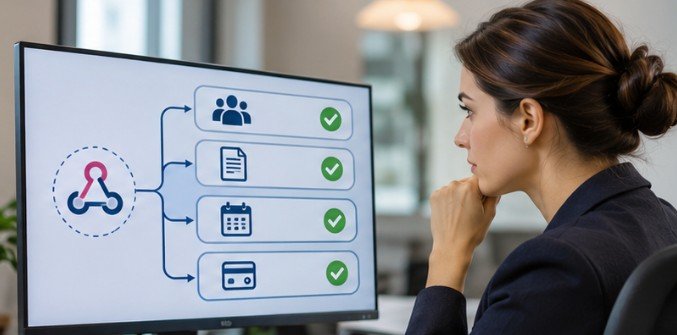
Open the legal application’s developer settings, webhook configuration panel, or supported API interface.
Register the receiving URL and select the necessary events.
Platforms such as Lawmatics, LawVu, and CourtListener offer webhook-related developer functionality, although available events, setup methods, authentication requirements, and subscription restrictions differ.
Subscribe only to events needed for the intended workflow. Unnecessary notifications increase processing complexity and may expose additional information.
Step 4: Verify Incoming Notifications
Every webhook request should be treated as untrusted until authenticated.
Depending on the provider, verification may use a shared secret, a cryptographic signature, or an authentication token.
Validate the request before processing its payload. Where signatures are supported, verify them against the original request body using the provider’s specified method.
Then check required fields and confirm that the event belongs to the correct matter or authorized workflow.
Step 5: Process and Test the Automation
Once authenticated, the event can trigger a downstream action.
A reliable design records the event, places longer-running work in a processing queue, and promptly returns the provider-required successful HTTP status.
Test valid events, invalid signatures, duplicate notifications, unavailable destination systems, and malformed data.
The goal is not merely successful delivery. It is ensuring that the correct action happens without creating duplicate records or losing information.
Protecting Client Confidentiality During Webhook Integration
Security requirements are particularly important for American law firms because event notifications may contain client identifiers, matter details, financial records, or privileged communications.
The American Bar Association discusses attorneys’ ethical duties involving competence, confidentiality, communication, and technology safeguards.
Similarly, Cornell Law School’s Legal Information Institute explains that an attorney’s duty of confidentiality generally extends beyond information protected by attorney-client privilege.
Minimize the Information Transmitted
A webhook does not always need to carry complete client records. Where supported, transmit an event identifier and matter reference instead of entire documents. The receiving application can retrieve additional information through an authenticated API when necessary.
This approach reduces unnecessary data exposure. The Federal Trade Commission’s data protection guidance recommends limiting access to sensitive information and protecting information transmitted electronically.
Maintain Audit Trails and Access Controls
Record event identifiers, delivery timestamps, processing outcomes, and relevant error details. Avoid recording confidential payloads in ordinary application logs unless there is a justified need and appropriate protection.
The National Institute of Standards and Technology highlights security-event awareness and logging capabilities as important elements of cybersecurity management.
Firms should also review state professional-conduct requirements, vendor agreements, and applicable privacy obligations before enabling new data flows.
Common Webhook Problems and How to Resolve Them

Even properly configured integrations can fail. An HTTP 401 or 403 response often indicates authentication or authorization problems. A 400 response may suggest an invalid payload, while a 404 can indicate an incorrect endpoint.
Server-side errors, including HTTP 500 responses, may require investigation of the receiving application’s availability or processing logic.
Duplicate notifications are another common concern. Providers may retry unsuccessful deliveries, so receiving applications should use event identifiers or other reliable deduplication mechanisms.
Out-of-order events also deserve attention. A later matter update could arrive before an earlier notification. Where ordering matters, retrieve the current authoritative record before changing its status.
For critical workflows, establish monitoring alerts, retry procedures, and a controlled method for replaying failed events.
When Webhooks May Not Be the Right Choice
Webhooks are useful, but they cannot replace every integration method. Traditional APIs remain valuable when applications need historical records, detailed searches, or information that has not changed recently.
Scheduled polling may be appropriate when a provider does not support webhooks or when periodic reconciliation is necessary.
Most importantly, webhook notifications should not independently determine legal deadlines, establish attorney-client relationships, or authorize sensitive financial transactions without appropriate safeguards.
A hybrid architecture often works best: webhooks provide timely notifications, while authenticated API requests and periodic reconciliation confirm the underlying information.
Frequently Asked Questions
1. Are webhooks secure enough for law firms?
Yes, when supported by HTTPS, request authentication, limited data sharing, access controls, and monitoring. Firms must also evaluate vendor security and applicable professional responsibilities.
2. Do legal software webhooks require coding?
Not always. Some automation platforms provide no-code integrations. Custom endpoints, advanced security requirements, and complex workflows may require developer assistance.
3. Can webhooks automatically update court calendars?
Yes, if the relevant systems support appropriate events and calendar integrations. Attorneys should still verify official court notices and deadlines.
4. What happens when a webhook fails?
Depending on the provider, unsuccessful deliveries may be retried. Firms should monitor delivery failures, prevent duplicate processing, and maintain recovery procedures.
Build Automation Around Reliability
The greatest advantage of legal software webhooks is not simply faster notifications. It is the ability to connect disconnected processes without requiring employees to monitor every application manually.
A carefully implemented integration can improve intake coordination, document tracking, billing visibility, and case management responsiveness.
However, automation becomes valuable only when the underlying process remains trustworthy.
Begin with one low-risk workflow, confirm the provider’s capabilities, implement strong security controls, and test failure scenarios before expanding.
For law firms, the best automation is not the one that performs the most actions. It is the one that consistently delivers the right information to the right people while preserving professional oversight.