

Have you ever returned home after a long workday only to find that the television sounds unbearable, the lights seem too bright, and even a simple conversation feels exhausting? I’ve noticed that when our senses spend hours processing noise, screens, and constant demands, home doesn’t always feel relaxing immediately.
Learning how to reduce sensory overload at home after work starts with creating a smoother transition between professional responsibilities and personal time. Whether you commute through a crowded American city or spend your day attending virtual meetings, small environmental adjustments can help you feel more comfortable.
You don’t need expensive equipment or complete silence. A quieter environment, comfortable clothing, and a consistent sensory reset routine can make evenings more manageable.
Why Do I Feel Sensory Overload After Work?
Sensory overload occurs when your brain struggles to manage incoming information from your surroundings. Bright lighting, loud conversations, uncomfortable textures, and constant notifications can become overwhelming.
According to NewYork-Presbyterian, excessive sensory input can make it difficult to filter distractions, sometimes triggering anxiety or a heightened stress response.
Common sensory overload symptoms in adults include irritability, difficulty concentrating, headaches, muscle tension, and increased sensitivity to environmental stimulation.
I believe recognizing these signs early makes it easier to respond before discomfort intensifies.
How Can You Calm Sensory Overload Immediately After Work?
The most effective approach is to reduce unnecessary stimulation while giving yourself enough time to transition into your evening.
Create a 15–30-Minute Buffer Zone Before Starting Household Tasks
Instead of immediately cooking dinner, cleaning, or answering messages, establish a dedicated decompression period.
I recommend spending approximately 15–30 minutes in a quieter part of your home, depending on your schedule and comfort.
If you live with family or roommates, explain that you need a short transition before joining conversations or activities.
This simple boundary can help you decompress after work without completely disconnecting from your household.
Change Into Comfortable Clothing to Reduce Physical Irritation
Uncomfortable work clothes can contribute to sensory discomfort.
Tight waistbands, irritating clothing tags, stiff collars, and rough fabrics may feel particularly unpleasant after a demanding day.
Changing into loose, breathable clothing removes unnecessary tactile stimulation.
I suggest choosing familiar fabrics that feel comfortable against your skin rather than focusing on a particular type of relaxation clothing.
Reduce Bright Lights, Household Noise, and Visual Clutter

Creating a sensory-friendly home environment doesn’t require major renovations.
Start by identifying the sights and sounds that overwhelm you most.
| Sensory trigger | Practical home adjustment |
| Bright lighting | Replace harsh overhead lighting with warm-toned lamps or dimmable bulbs. |
| Household noise | Turn off unnecessary background entertainment or use comfortable earplugs. |
| Visual clutter | Close cluttered rooms, clear a small relaxation area, or cover your workspace. |
| Strong odors | Avoid irritating fragrances and improve ventilation when appropriate. |
| Uncomfortable textures | Choose softer clothing, blankets, and seating materials. |
I recommend making gradual changes rather than trying to eliminate every sensation. Some people prefer complete quiet, while others relax more comfortably with gentle background sounds.
Take a Break From Screens and Constant Notifications
Phones, television, and social media can extend the stimulation you’ve experienced throughout the workday.
One practical way to manage sensory overload after work is to activate Do Not Disturb, silence nonessential notifications, and avoid immediately opening social media.
For remote employees, separating professional and personal screen time can also help reduce digital fatigue while working remotely.
Even a short screen-free transition may make your evening feel less demanding.
Which Grounding Techniques Help With Overstimulation?
When sensory discomfort builds, simple physical activities may help you regain a sense of comfort and control.
Try Gentle Breathing to Support Relaxation
Slow breathing can provide a quiet activity to focus on.
You might try inhaling gently for three counts, pausing briefly if comfortable, and exhaling for three counts.
However, there’s no need to follow a rigid rhythm. Avoid holding your breath if it causes dizziness or discomfort.
The Cleveland Clinic discusses calming strategies, including breathing exercises, for managing overstimulation.
Use Comfortable Temperature Changes to Feel Refreshed
A comfortably warm shower or washing your face with cool water may help create a refreshing transition after work.
I recommend avoiding extreme temperatures. The goal is personal comfort, not forcing a dramatic physical response.
Different people respond differently to temperature, so choose whichever sensation feels soothing.
Consider Deep Pressure or Gentle Movement
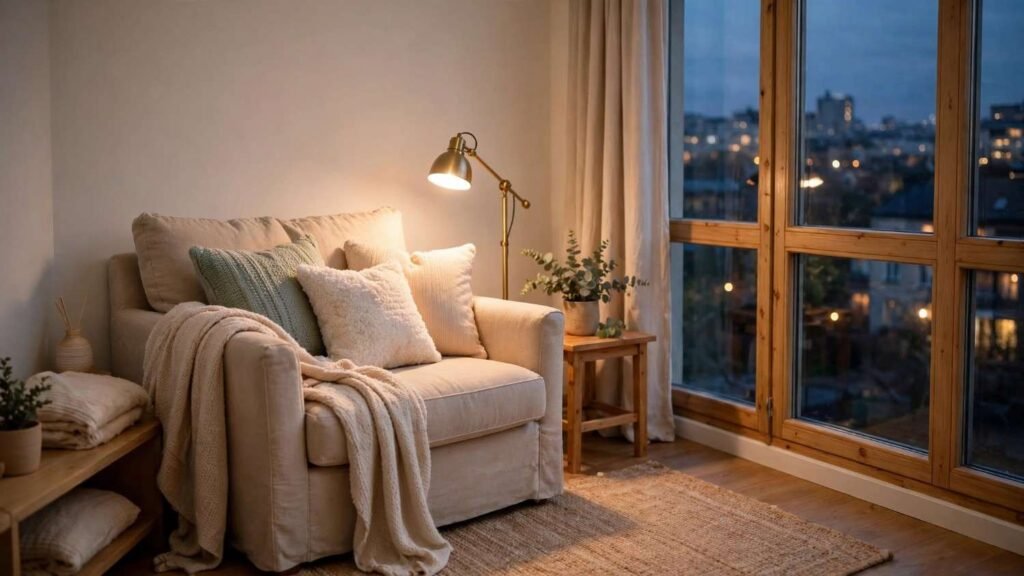
Some individuals find that a comfortably weighted blanket, supportive pillow, or gentle stretching provides reassuring physical sensations.
If you try a weighted blanket, ensure you can remove it easily and breathe comfortably. Avoid placing heavy pressure across your chest.
Other people prefer walking, stretching, or sitting without additional touch.
Finding how to calm overstimulation often involves experimenting with gentle options and recognizing your personal preferences.
How Can I Create a Quiet Sensory-Friendly Space in a Small Apartment?
A dedicated relaxation area can be helpful, even in a studio apartment or shared home.
Choose a bedroom corner, comfortable chair, or another location away from unnecessary distractions.
Add an adjustable lamp, supportive cushions, and comfortable fabrics. Keep the space reasonably uncluttered and avoid strong fragrances if you’re sensitive to smells.
I recommend using this area consistently so it becomes part of your after-work transition.
You can also establish household boundaries that protect your quiet time without disrupting important family responsibilities.
What Is a Simple 20-Minute Sensory Reset Routine?
When explaining how to reduce sensory overload at home after work, I recommend focusing on a routine that feels realistic rather than another demanding schedule.
During the first five minutes, change clothes and silence unnecessary notifications.
Spend the next five minutes adjusting your lighting, reducing background noise, and finding a comfortable place to sit.
For the following five minutes, try gentle breathing, stretching, or quiet rest.
Use the final five minutes to drink water and gradually return to your evening activities.
This schedule is flexible, not a medically established recovery period. Some people need a longer buffer, while others feel comfortable sooner.
How Can I Prevent Sensory Overload Every Evening?

Understanding how to reduce sensory triggers at home starts with recognizing recurring patterns.
Notice whether difficult days involve excessive meetings, crowded commutes, poor sleep, or prolonged screen exposure.
Build short breaks into your workday, maintain clear boundaries around professional messages, and establish a predictable evening routine. Exploring practical ways to reduce digital fatigue while working remotely, such as limiting unnecessary video calls, taking regular screen breaks, and managing notifications, can also help prevent sensory overstimulation.
Adequate sleep, regular meals, and hydration can also support your ability to manage everyday demands.
If sensory overload frequently interferes with your relationships, work, or daily activities, consider speaking with a qualified healthcare professional.
Frequently Asked Questions (FAQs)
1. Why Do I Feel Overstimulated When I Get Home From Work?
Continuous exposure to conversations, screens, lighting, and other demands can make additional household stimulation harder to tolerate. Reducing unnecessary sensory input may help.
2. What Is the Fastest Way to Reduce Sensory Overload at Home?
Move somewhere quieter, lower harsh lighting, and minimize competing sounds. Comfortable clothing and gentle breathing may also help, depending on your personal triggers.
3. Can Working From Home Cause Sensory Overload?
Yes. Frequent video meetings, notifications, household noise, and limited separation between professional and personal activities can contribute to overstimulation.
4. How Long Does Sensory Overload Recovery Take?
Sensory overload recovery time varies. Some people feel more comfortable after a brief quiet period, while others require a longer break. There is no universal recovery timeline.
Final Thoughts
I’ve learned that how to reduce sensory overload at home after work isn’t about creating a perfectly silent household. It’s about recognizing personal triggers and making your surroundings more comfortable.
Start with one manageable adjustment, such as dimming the lights, taking a screen break, or creating a quiet corner.
Over time, combining these small changes with consistent boundaries and restorative habits can help make your evenings feel calmer, more comfortable, and easier to enjoy.