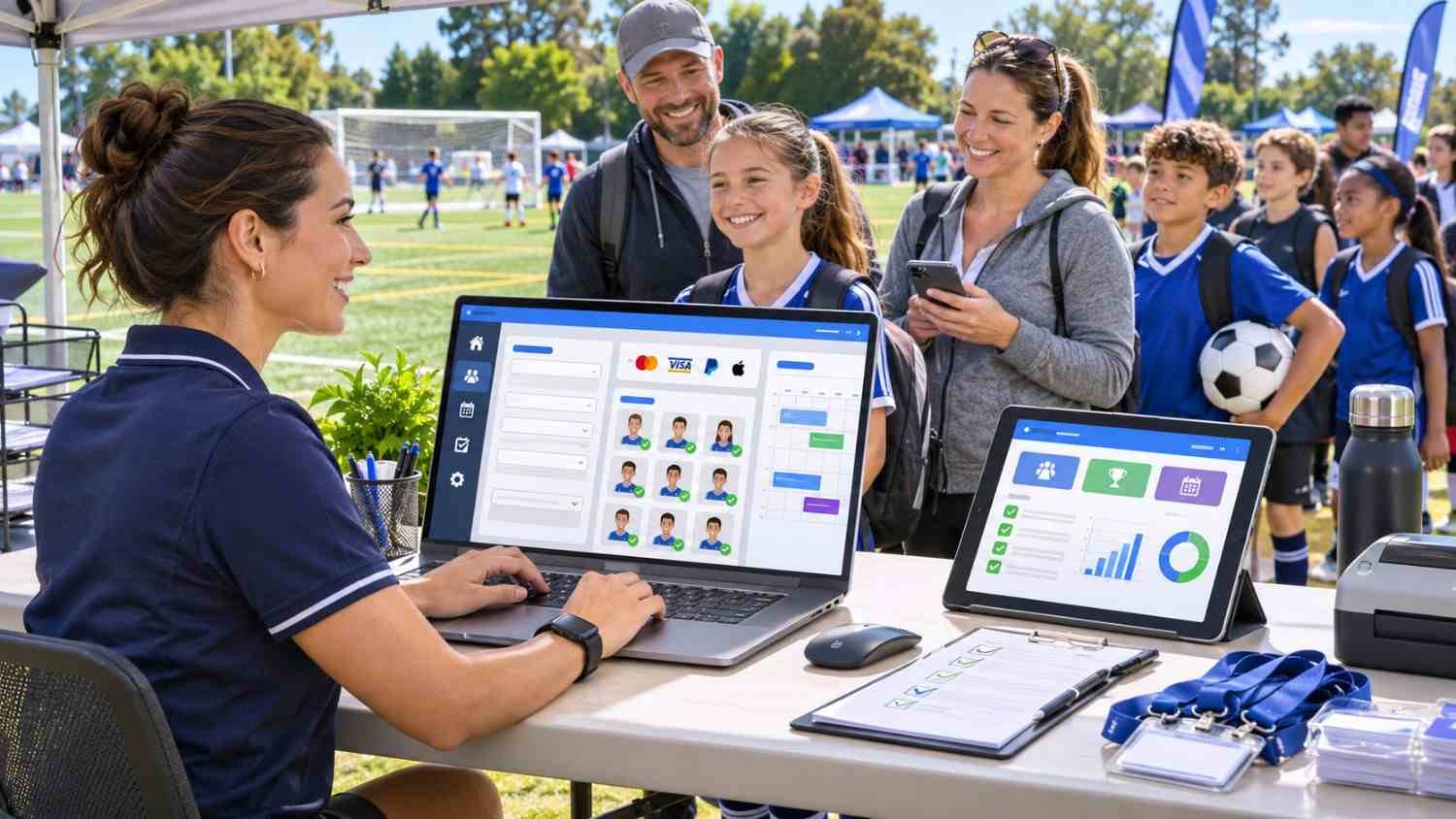

Managing a sports organization requires coordinating registrations, payments, schedules, athlete records, and communication. I’ve seen how disconnected systems can create unnecessary administrative work, especially when teams depend on spreadsheets and separate applications.
Sports management software integration solves these challenges by connecting administrative platforms with external applications, performance tracking devices, and automated workflows.
Whether you manage a youth baseball league, college athletic department, or professional sports organization, connecting your technology can improve accuracy, simplify operations, and support better decisions.
What Is Sports Management Software Integration?
Sports software integration connects administrative systems, including registration, scheduling, billing, and team rosters, with external applications and hardware.
Instead of manually transferring information, organizations use application programming interfaces (APIs), native integrations, or automation platforms to synchronize data.
For example, when a player registers for a soccer league, the connected system can process payment, update membership records, assign roster information, and send confirmation messages.
This creates a more efficient digital environment for coaches, administrators, athletes, and families.
Why Do Sports Organizations Need Integrated Software?
Disconnected applications frequently cause duplicate records, missed notifications, and inconsistent financial information.
Sports management automation reduces repetitive tasks by allowing systems to exchange accurate information automatically.
For US youth sports organizations, this can simplify seasonal registrations, background screening workflows, and parent communication. Larger athletic departments can benefit from centralized athlete information, financial reporting, and performance analytics.
I’ve found that the biggest advantage isn’t simply saving time. It’s giving everyone access to consistent information without constantly checking multiple platforms.
What Are the Most Important Sports Management Software Integrations?

How Do Payment and Accounting Integrations Simplify Billing?
A sports payment system integration connects registration fees, ticket sales, membership dues, and financial records.
Payment processors such as Stripe can support online transactions, while accounting software such as QuickBooks can help organizations track revenue and reconcile payments when compatible connections are available.
These integrations can automate invoices, payment confirmations, recurring fees, and refund tracking.
For American sports clubs, this reduces manual bookkeeping and improves financial visibility. International organizations may also require regional payment methods such as SEPA direct debit.
How Can Wearables and GPS Trackers Integrate With Sports Software?
Wearable technology provides valuable information about athlete performance, training intensity, and physical activity.
GPS vests, smartwatches, and biometric tracking devices can collect movement patterns, heart rate measurements, and workload information.
Platforms such as SAP Sports One support importing external tracking data for athlete performance analysis.
When connected appropriately, these systems help coaching staff monitor training loads, compare performance trends, and make more informed training decisions.
However, performance indicators should support professional judgment rather than independently determine injury risk.
How Does Facility and Court Booking Integration Work?
Sports scheduling software integration connects venue reservations, team calendars, and facility availability.
For example, a basketball organization can synchronize court bookings with practice schedules to reduce double reservations.
Compatible public-facing facility discovery platforms can also display available booking slots. Tools such as Bounce illustrate the broader concept of connecting venue discovery with reservation management, although specific integration compatibility must be verified.
This is particularly helpful for organizations managing multiple fields, courts, or training facilities.
Can Sports Software Connect With Digital Scoreboards?
Yes. Compatible athletic management platforms can share match statistics, player achievements, and competition results with digital record boards.
Digital Record Board demonstrates how athletic software can connect with electronic recognition displays through APIs and data synchronization.
Schools, colleges, and sports facilities can use these connections to showcase updated achievements without repeatedly entering statistics.
How Do Messaging and CRM Integrations Improve Communication?
Sports CRM integration connects membership information with communication and marketing platforms.
When administrators update rosters or schedules, integrated applications can send push notifications, email reminders, or team messages.
Depending on available integrations and permissions, organizations may also connect WhatsApp Business APIs or dedicated mobile applications.
For professional organizations, CRM connections can support fan engagement, ticketing analysis, and sponsorship reporting.
Sports organizations that sell tickets, merchandise, or memberships online can also use retargeting ads for ecommerce to reconnect with visitors who showed interest but did not complete a purchase.
Marketing automation, sports league management automation, and AI-supported analytics can help teams streamline operations, evaluate campaign performance, and measure sponsor exposure.
Similar developments in digital commerce are also influencing how sports organizations approach online registrations, merchandise sales, and fan engagement; explore the top 10 ecommerce trends to understand the broader changes shaping online customer experiences.
Which Sports Management Platforms Offer Integration Capabilities?

Several platforms support different aspects of sports administration.
SportsEngine HQ
SportsEngine HQ focuses on youth sports registration, organizational administration, and background screening. Its published API supports access to certain registration and organizational data, although sensitive background screening records have restrictions.
TeamSnap
TeamSnap supports roster management, team messaging, scheduling, and calendar synchronization. It’s particularly useful for coaches and families managing multiple activities.
LeagueApps
LeagueApps provides registration, payments, scheduling, and communication tools. Its APIs and integration capabilities support custom workflows and connections with compatible external services.
SAP Sports One
SAP Sports One serves performance-focused sports organizations through athlete management, training analysis, scouting, and external tracking data imports.
PlayHQ
PlayHQ focuses on competition administration, fixtures, participant management, and tournament operations. Integration availability depends on the relevant organization, governing body, and supported services.
How Do You Integrate Sports Management Software Successfully?
Step 1: Identify Your Existing Systems
Start by reviewing registration platforms, payment tools, CRM applications, and scheduling software.
Determine which records require synchronization and identify the primary source for each data category.
Step 2: Choose an Integration Method
Native connectors work well for straightforward integrations.
A sports management API integration provides greater customization, while integration platform as a service (iPaaS) solutions can coordinate workflows across compatible applications.
Choose based on complexity, budget, and technical requirements.
Step 3: Configure Data Mapping and Security
Match corresponding fields between systems and establish secure authentication.
Use role-based permissions, encryption, and appropriate data-sharing controls, particularly when handling minors’ information.
Step 4: Test and Monitor Your Workflows
Test registrations, payment updates, roster changes, automated notifications, and fitness tracking data synchronization before launching.
Monitor failed transactions, expired credentials, duplicate records, and synchronization errors.
Regular maintenance helps keep integrations reliable.
What Are the Common Sports Software Integration Challenges?

Compatibility issues, inconsistent data formats, limited API access, and synchronization delays can disrupt connected systems, making sports ticketing system integration more challenging.
Duplicate athlete profiles may also occur when applications use different identification methods.
I recommend establishing consistent data standards, documenting workflows, and choosing software providers that offer dependable technical support.
Organizations should also assess applicable privacy requirements, payment security standards, and ongoing integration costs before implementation.
Frequently Asked Questions (FAQs)
1. Can Small Sports Clubs Benefit From Software Integration?
Yes. Small clubs can connect registration, payment, and communication tools to reduce repetitive administrative tasks without building complex systems.
2. What Is the Best Way to Connect Sports Management Software?
Native integrations are often the simplest starting point. APIs and iPaaS solutions are useful when organizations need greater customization.
3. Can Sports Management Software Track Athlete Performance?
Yes. Compatible platforms can import GPS, wearable, and training data to support athlete monitoring and performance analysis.
4. How Much Does Sports Software Integration Cost?
Costs depend on platform subscriptions, API availability, implementation complexity, and maintenance. Custom development generally requires additional investment.
Final Thoughts
I believe connected technology is becoming essential for sports organizations that want to operate efficiently without increasing administrative workloads.
The best approach is to prioritize high-impact workflows, select compatible applications, and test integrations carefully.
With effective sports management software integration, sports clubs and athletic organizations can streamline daily operations, improve communication, and build a more scalable management system.