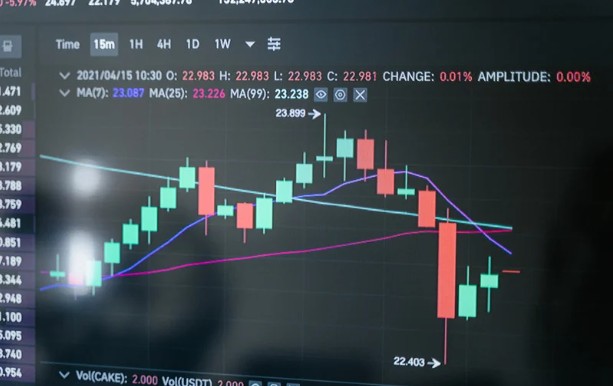

When I first research a stock, I rarely begin with a complicated valuation model. I start by collecting the essential facts: recent price behavior, trading volume, company performance, market news, and broader economic conditions. Learning How to Use Fintechzoom io for Stock Market Research can make this initial process more organized because the platform brings financial news, market commentary, educational material, and asset-related information into one place.
However, no financial website should become the sole basis for an investment decision. Fintechzoom io works best as a research starting point. Its information should be compared with company filings, official announcements, exchange data, and reliable brokerage tools before money is committed.
What Is Fintechzoom io?
Fintechzoom io is a financial information platform covering stocks, market indexes, cryptocurrencies, commodities, banking, and personal finance. It publishes articles and market-related insights intended to help readers understand changing financial conditions.
The website is an information resource rather than a brokerage. Visitors can use it to investigate companies and follow market developments, but they cannot directly purchase or sell shares through the platform. This distinction matters because research information and trade-execution data serve different purposes.
A quoted price or market observation may help identify an opportunity, while a brokerage account provides the verified price and order controls required to execute a trade.
Start With a Clear Research Question
Effective stock research begins with a specific question. Instead of searching for everything about a company, decide what you need to determine.
You might want to know whether a company’s revenue is growing, why its share price recently declined, how it compares with competitors, or whether an earnings announcement changed investor sentiment. A focused question prevents news headlines and short-term price movements from distracting you.
Once the objective is clear, search for the company name, ticker symbol, industry, or relevant stock index. Review the publication dates carefully because older reports may refer to prices, forecasts, or economic conditions that have already changed.
Review the Stock’s Recent Market Performance
Begin with the stock’s current price direction, daily percentage change, and trading volume. Price shows what buyers and sellers currently agree to pay, while volume reveals the level of market participation.
A price increase accompanied by unusually high volume may indicate stronger interest than a similar move on light trading. However, volume alone does not explain why investors are buying or selling. It should be examined alongside earnings reports, corporate announcements, industry developments, and wider market conditions.
Compare performance over several periods instead of concentrating on one session. A stock can rise sharply in a single day while remaining in a longer-term decline. Looking at weekly, monthly, and yearly movements provides better context.
Compare the Company With the Broader Market
A stock’s movement becomes more meaningful when compared with an appropriate benchmark. A technology company may be evaluated against a technology-focused index, while a large established corporation may be compared with a broad market index.
Suppose a stock falls by 2 percent while its sector falls by 5 percent. Although the company declined, it demonstrated relative strength. If the stock drops while its industry rises, the weakness may be connected to company-specific concerns.
Fintechzoom io also covers major indexes and economic developments. This broader coverage can help researchers distinguish between an isolated corporate problem and a market-wide reaction to inflation, interest rates, employment data, or geopolitical events.
Examine Fundamental Business Performance
Stock prices can move rapidly, but long-term business quality depends on financial performance. Look for information about revenue, net income, earnings per share, debt, cash flow, operating margins, and management guidance.
Revenue growth shows whether demand is expanding, but growth without improving profitability may require additional investigation. Earnings per share can help measure profitability on a per-share basis, while cash flow indicates whether business operations are generating actual cash.
Valuation measures such as the price-to-earnings ratio can also provide context. A high ratio is not automatically negative, and a low ratio is not automatically attractive. Investors may pay more for a company expected to grow quickly, while an unusually low valuation may reflect serious business risks.
Any figures found in an article should be confirmed through the company’s latest earnings release, annual report, or regulatory filing.
Connect News With Price Movements
Financial news becomes useful when it explains a measurable market reaction. Search for announcements involving earnings, acquisitions, product launches, leadership changes, legal disputes, regulations, or analyst revisions.
Check when an event occurred and compare that date with the stock chart. This helps determine whether the market reacted immediately, gradually, or not at all. It also reduces the chance of treating an old story as a new catalyst.
Separate factual reporting from forecasts. A completed acquisition or published earnings result is verifiable. A prediction about a future share price remains an opinion, regardless of how confidently it is presented.
Use Technical Information Carefully
Charts can help identify trends, support and resistance areas, volatility, and momentum. Moving averages may reveal the general direction of a stock, while indicators such as the relative strength index can suggest unusually strong buying or selling activity.
Technical indicators should not be treated as guarantees. A stock can remain overbought or oversold longer than expected, and unexpected news can quickly invalidate a chart pattern. Combine technical observations with business fundamentals and current developments instead of relying on a single signal.
Verify Important Information Before Acting
Verification is the most important part of the process. Confirm company results through official filings and investor-relations releases. Check market prices with a recognized exchange or brokerage, especially when timing matters.
Also confirm that you are visiting the intended domain. Similar website names can create confusion, while copied or outdated pages may present inaccurate information. Examine publication dates, author information, cited evidence, and disclaimers before trusting an article.
Fintechzoom io should support a broader research routine rather than replace independent due diligence or qualified financial guidance.
Frequently Asked Questions
1. How to Use Fintechzoom io for Stock Market Research safely?
Use it to discover market developments, company-related articles, price trends, and research questions. Verify every important price, financial figure, and corporate claim through official filings, company announcements, or a reputable brokerage before making a decision.
2. Can I buy stocks through Fintechzoom io?
The platform primarily provides financial information and educational content. It is not a brokerage, so investors generally need a separate regulated brokerage account to execute stock trades.
3. Is Fintechzoom io suitable for beginners?
Beginners may find its broad financial coverage helpful for learning market terminology and following major developments. They should still study basic investing principles and understand risk before acting on market commentary.
4. Can Fintechzoom io predict stock prices?
No platform can predict future prices with certainty. Forecasts and technical signals represent possible scenarios, not guaranteed outcomes.
Final Thoughts
I see Fintechzoom io as a convenient first layer of stock research, especially when I want to understand recent market activity and identify the questions that deserve deeper investigation. Its greatest value comes from combining company coverage with broader financial context.
Still, responsible research requires more than reading one article or checking one price movement. I would always compare its information with official company documents, current market data, and independent analysis. That disciplined verification process turns a convenient information platform into one component of a more reliable stock-research method.