
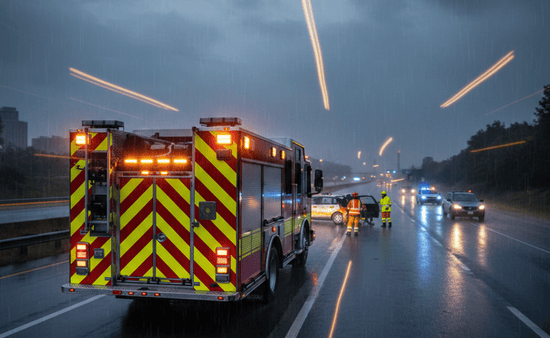
Whether you are a first responder rushing to an accident scene, a construction worker on a busy highway, or a utility technician repairing lines during a storm, visibility is your first line of defense. In high-risk situations, being seen isn’t just a matter of convenience; it’s a critical safety requirement. When visibility drops due to weather, darkness, or traffic density, the risk of collision skyrockets.
This article explores practical strategies for enhancing vehicle visibility in dangerous conditions. We will look beyond the basics to understand why visibility matters, the technology that helps, and best practices for staying safe when the pressure is on.
The Science of Conspicuity
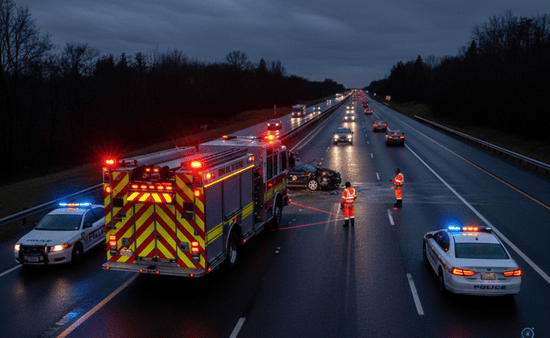
Visibility isn’t just about brightness; it’s about conspicuity—the ability of an object to draw attention to itself and be easily recognized. There are two main types of conspicuity:
- Attention Conspicuity: This is the “look at me” factor. It’s what makes a driver notice a vehicle in their peripheral vision. Flashing lights and high-contrast colors trigger this response.
- Cognitive Conspicuity: This is the “I know what that is” factor. Once a driver sees the vehicle, they need to instantly recognize it as a hazard or an authority vehicle. Standardized lighting patterns and recognizable markings help drivers process this information quickly so they can react appropriately.
In high-risk environments, you need both. A bright light might get attention, but if it doesn’t clearly signal “slow down” or “move over,” it hasn’t fully done its job.
Lighting: The Foundation of Safety
The most effective way to improve visibility is through advanced lighting systems. Modern LED technology has revolutionized how emergency and work vehicles signal their presence.
The Evolution of Warning Lights
Gone are the days of dim, rotating incandescent bulbs that drain batteries and fail frequently. Today’s LED solutions are brighter, more energy-efficient, and incredibly durable. They offer instant-on capabilities, meaning there is no ramp-up time for the light to reach full intensity—a crucial feature when milliseconds count.
Strategic Placement
Lighting must be visible from 360 degrees. A common mistake is focusing heavily on the front and rear while neglecting the sides of the vehicle. Intersection crashes are common for emergency vehicles, often because cross-traffic didn’t see the vehicle approaching from the side.
- Roof-Mounted Lighting: This provides the highest point of visibility, allowing your signal to be seen over other traffic. Using high-quality emergency light bars ensures that your vehicle commands attention from a distance, cutting through fog, rain, or heavy traffic congestion.
- Perimeter Lighting: Grille lights, fender lights, and running board lights help define the vehicle’s shape. This helps other drivers judge distance and speed more accurately.
- Rear Traffic Advisors: Directional amber arrows are essential for guiding traffic around a stationary vehicle. They provide clear instructions to approaching drivers, reducing confusion and preventing rear-end collisions.
Reflective Markings and Livery
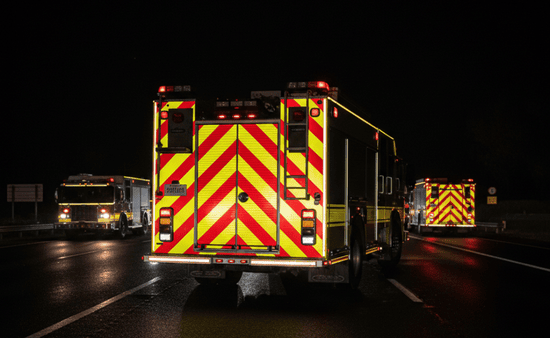
Lights are active visibility; markings are passive visibility. They work together to ensure you are seen even if the electrical system fails or the vehicle is parked without the engine running.
Chevron Striping
One of the most effective safety enhancements in recent years is the widespread adoption of retroreflective chevron striping on the rear of vehicles. Studies have shown that the inverted “V” pattern in high-contrast colors (typically red and yellow) significantly improves a driver’s ability to estimate the closing speed of a stopped vehicle. This reduces the likelihood of high-speed rear-end impacts.
Contour Markings
Outlining the vehicle’s shape with reflective tape helps other drivers understand what they are looking at. In low-light conditions, a large truck can look like a dark void. Contour markings define the edges, helping passing traffic maintain a safe distance.
High-Visibility Paint Schemes
While black or dark blue vehicles might look sleek, they are harder to see at night. High-visibility colors like lime-yellow or white create a natural contrast with the road surface and the surrounding environment, making the vehicle pop visually without requiring any power.
Operational Best Practices
Having the right gear is only half the battle. How you use it determines your actual safety on the scene.
1. Scene Positioning
Park your vehicle to create a safe zone. Angling the vehicle (often called “fending off”) can deflect an impacting vehicle away from the workspace or personnel. This positioning also exposes more of the vehicle’s reflective markings and side lighting to approaching traffic.
2. Light Discipline
More isn’t always better. At night, an overwhelming amount of blinding, chaotic strobes can actually disorient passing drivers, often causing the “moth-to-flame” effect where drivers unintentionally steer toward the bright lights.
- Dimming Functions: Many modern systems allow you to dim the intensity of the lights for nighttime operations.
- Flash Patterns: Use slower, synchronized flash patterns when parked. Rapid, chaotic flashing is better for moving through traffic but can be distracting when stationary.
3. Contrast Awareness
Be aware of your background. Parking a white vehicle against a snowbank or a grey vehicle against a concrete wall reduces your visibility. Whenever possible, position the vehicle where it contrasts with its surroundings.
Technology Beyond Lights
New technologies are emerging to push visibility even further.
- V2X Communication: Vehicle-to-Everything communication allows emergency vehicles to digitally “talk” to modern consumer cars. This can trigger a warning on a civilian driver’s dashboard alerting them of an approaching emergency vehicle before they can even see it visually.
- Digital Alerting: Apps like Waze can now integrate with fleet systems to automatically mark the location of active work zones or emergency stops on the map, giving drivers advance warning to slow down.
Safe Operations Save Lives
Improving vehicle visibility is a multifaceted approach that combines psychology, technology, and strategy. It requires investing in high-quality equipment, applying reflective markings intelligently, and training operators on how to position their vehicles safely.
When you are working in a high-risk environment, you cannot rely on other drivers to be attentive. You must force them to see you. By maximizing your conspicuity through every available method, you ensure that everyone—you, your crew, and the public—goes home safely at the end of the shift.