
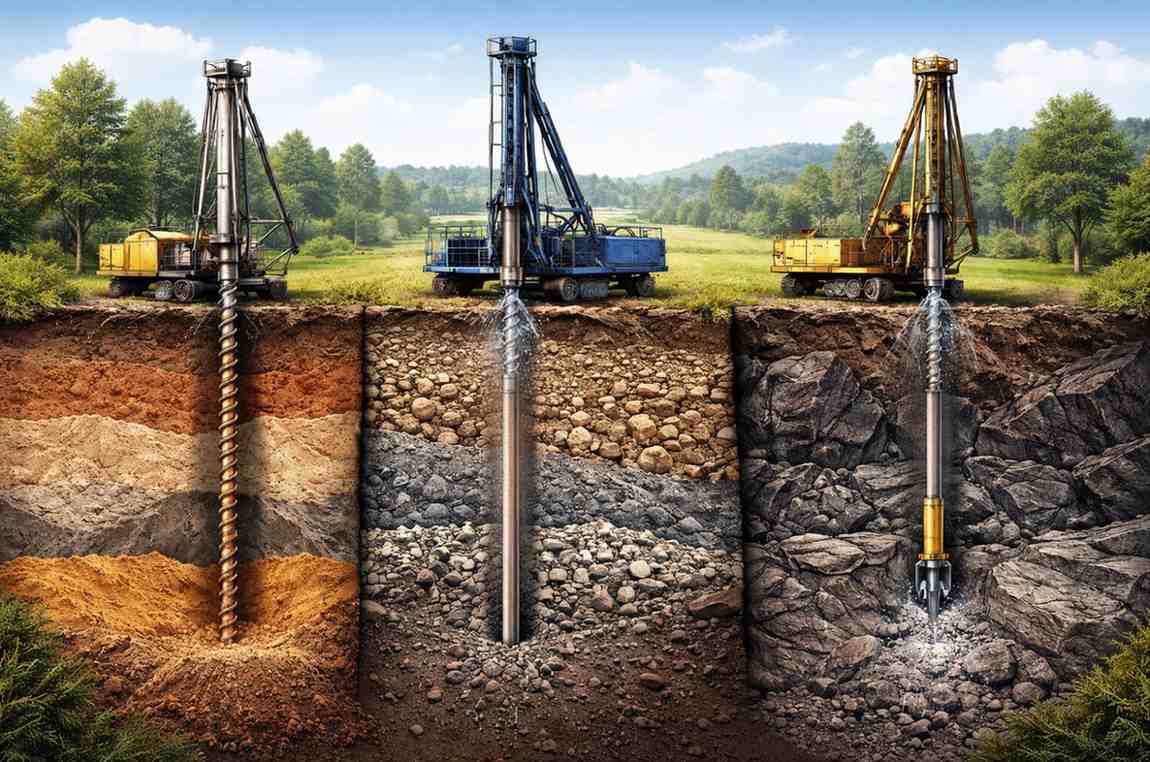
Understanding the ground composition is essential, but selecting the correct drilling method is the most critical part of any subsurface project. Choosing the wrong technique can lead to damaged equipment, delays, and budget issues, whereas matching the drilling method to the geology ensures efficiency and safety.
Matching the Method to the Soil
Soil is unconsolidated material, meaning the particles aren’t fused together like rock. However, the density, moisture content, and particle size vary wildly, requiring specific approaches for each.
Clay
Clay is cohesive and plastic. It sticks together and can be molded.
- Challenge: The main issue with clay is that it tends to swell and stick to the drilling tools, often clogging the bit (a phenomenon known as “balling up”).
- Method: Auger drilling is typically the gold standard here. The spiral flights of the auger help lift the sticky cuttings out of the hole. For stiffer clays, rotary drilling with water or mud circulation helps keep the bit clean.
Sand and Silt
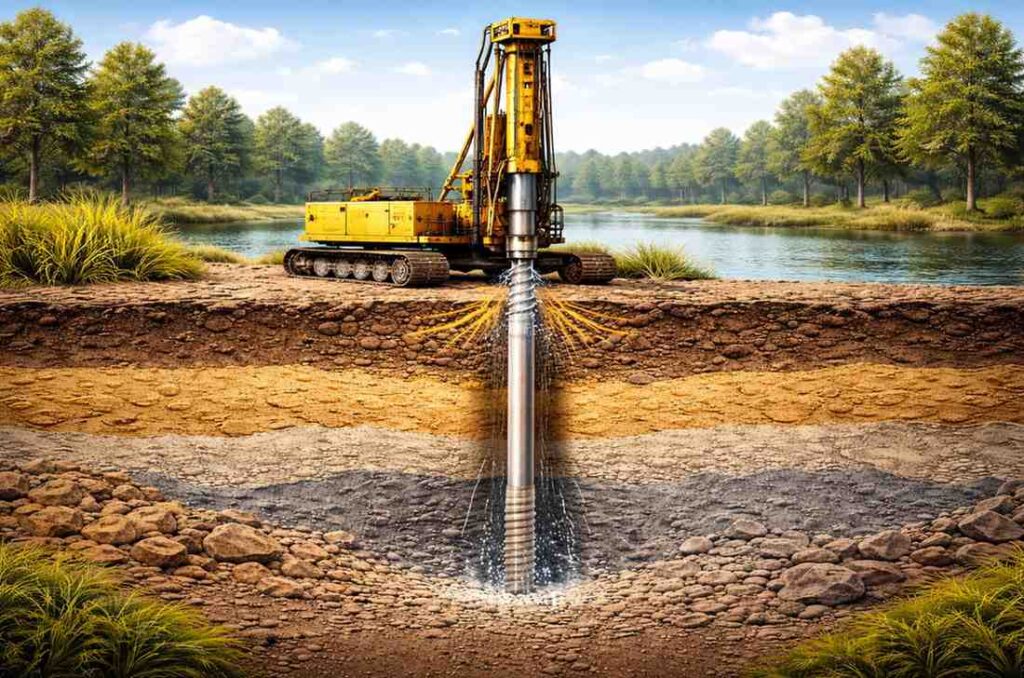
These are granular soils. Sand is coarse, while silt is fine, often feeling like flour.
- Challenge: Stability is the enemy here. Loose sand and silt are prone to collapsing into the borehole (caving) as soon as the drill string is removed.
- Method: Sonic drilling works exceptionally well in loose formations because it vibrates the soil particles into a fluid state, allowing for easy penetration and casing advancement to keep the hole open. Mud rotary is also effective, as the drilling fluid creates a “filter cake” on the borehole walls to prevent collapse.
Gravel and Cobbles
This creates a challenging, heterogeneous environment with large, loose stones.
- Challenge: The loose rocks can shift, jamming the drill bit or deflecting the drilling path.
- Method: Dual rotary or casing advancer systems are often necessary. These methods drill and case the hole simultaneously, preventing the loose gravel from collapsing on the drill string.
Drilling Through Rock Formations
Rock presents a different set of challenges, primarily related to hardness and abrasiveness.
Sedimentary Rock
Examples include sandstone, limestone, and shale. These are generally softer and easier to drill than igneous or metamorphic rocks.
- Method: Rotary drilling with drag bits or PDC (Polycrystalline Diamond Compact) bits is usually sufficient. The cutting action shears the rock away effectively.
Igneous Rock
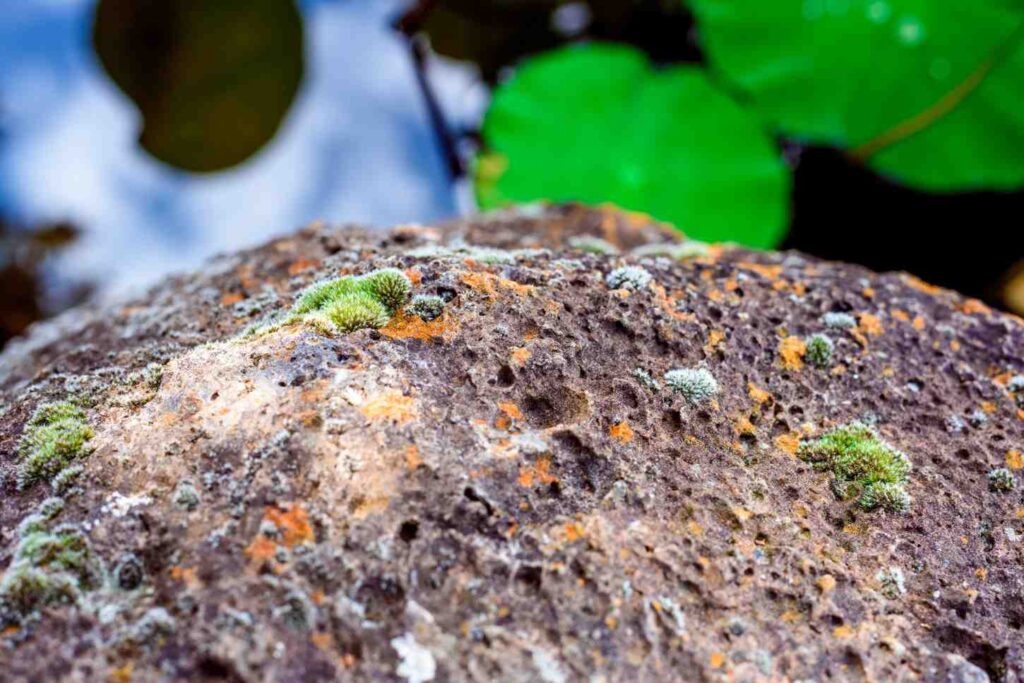
Examples include granite and basalt. These are formed from cooled magma and are incredibly hard.
- Method: This requires high impact and abrasion resistance. Percussion drilling (like Down-the-Hole hammering) is highly effective, as it pulverizes the rock through repeated impact. Diamond core drilling is used when an intact sample is required, though it is slower.
Metamorphic Rock
Examples include quartzite and gneiss. These rocks have been altered by heat and pressure, often resulting in extreme hardness and foliation (layering).
- Method: Similar to igneous rock, diamond coring or heavy-duty percussion methods are needed. The hardness of quartzite, in particular, can wear down bits rapidly, requiring high-quality diamond tooling.
A Deep Dive into Common Drilling Techniques
Understanding the mechanics of each method clarifies why certain techniques work better for specific geologies.
Auger Drilling
This is one of the oldest and simplest methods. It uses a helical screw (the auger) to bore into the ground. As the auger rotates, the flights lift the soil to the surface.
- Best for: Shallow depths in soft to medium soils (clay, silt).
- Limitations: It struggles in loose sand below the water table and cannot penetrate hard rock.
Rotary Drilling
This versatile method relies on a sharp, rotating drill bit to cut or crush the formation. A drilling fluid (mud or air) is circulated down the drill pipe to cool the bit and carry cuttings to the surface.
- Best for: Deep boreholes in sedimentary rock and consolidated soils. It is the standard for oil and gas exploration.
- Limitations: It requires significant support equipment for fluid management.
Percussion Drilling (Down-the-Hole Hammer)
Instead of just rotating, this method utilizes a pneumatic hammer located directly behind the drill bit. The hammer delivers rapid, powerful impacts to the rock, shattering it, while air flushes the cuttings out.
- Best for: Hard, abrasive rock (granite, basalt). It is very fast in these conditions.
- Limitations: Not suitable for soft, unstable soils where the air blast can erode the borehole walls.
Sonic Drilling
This advanced technique uses a generator to create high-frequency, resonant vibrations. These vibrations are sent down the drill string to the bit, fluidizing the soil particles to reduce friction.
- Best for: Continuous sampling in mixed soils, sensitive environmental sites, and glacial till. It is incredibly fast in overburden.
- Limitations: Equipment is expensive and generates significant heat, requiring careful management.
Key Factors in Selection
While the geology dictates the possibilities, other factors dictate the practicality of a drilling method.
Project Depth
Augers are generally limited to shallow depths (typically less than 30 meters). For projects requiring depths of hundreds or thousands of meters, rotary or percussion methods are the only viable options.
Environmental Concerns
In contaminated sites, minimizing waste is crucial. Sonic drilling is often preferred here because it generates significantly less investigation-derived waste (IDW) compared to mud rotary drilling. Additionally, avoiding drilling fluids prevents cross-contamination of aquifers.
Cost vs. Speed
Percussion drilling is fast in rock, making it cost-effective for water wells. Diamond coring provides the best geological data but is slow and expensive. Project managers must balance the need for speed with the need for data quality. For residential projects, such as water well drilling in Utah, cost-efficiency and speed through varying rock layers are often the primary drivers for choosing rotary or percussion methods.
Best Practices for Efficient Drilling
Regardless of the method chosen, operational discipline determines the success of the project.
Site Investigation: Never drill blind. Review geological maps and previous borehole logs from nearby sites to anticipate subsurface conditions.
Tool Maintenance: A dull bit is a liability. It slows down penetration rates, increases fuel consumption, and puts excessive stress on the drill rig. Regular inspection and replacement of tooling are non-negotiable.
Fluid Management: For methods using drilling mud, maintaining the right viscosity and density is essential. The fluid must be thick enough to carry cuttings but thin enough to pump efficiently.
Safety Protocols: Drilling involves high-pressure lines, rotating machinery, and heavy loads. Strict adherence to safety zones, PPE requirements, and emergency shut-off procedures saves lives.
Conclusion
Drilling spans from simple hand tools to massive oil rigs, but success depends on understanding geology. Methods must suit ground conditions like clay, sand, or granite, while also meeting project constraints such as depth and budget. Advances like sonic drilling promise greater versatility for complex ground conditions.